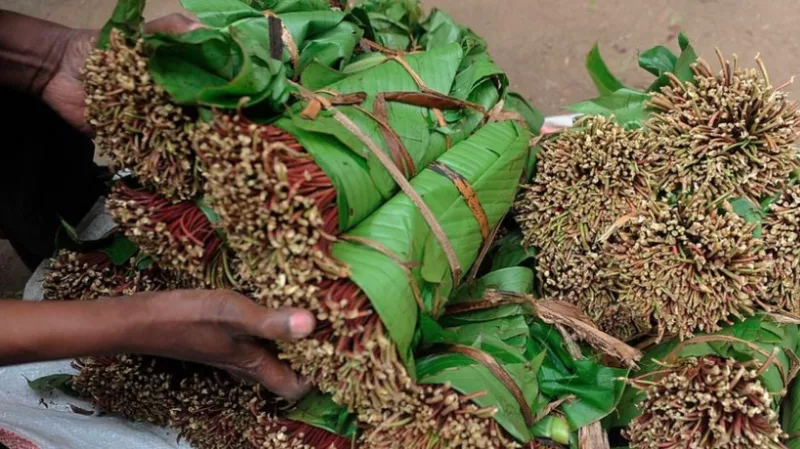
The Kenya Bureau of Standards has warned manufacturers and traders against putting its Standardization Mark on beverages infused with khat, saying the products fall outside the scope of its certification. In a notice dated October 16, the bureau said it had found that some producers certified to make fruit juices and fruit drinks were using those permits to market khat-infused beverages, according to The Star, Kenya.
The regulator said the practice misrepresented the certification status of the drinks and could lead to enforcement action under the Standards Act, Cap 496.
Kebs stated that certification permits apply only to the products named in an approved scope of certification and do not cover khat-infused beverages or anything else beyond that scope. Certification for fruit juices and fruit drinks, the bureau added, does not by itself give a manufacturer the right to use the same permit for products containing khat.
"Kebs has therefore not issued Standardization Mark permits for any khat-infused beverages," the notice said.
The notice was issued under the authority of Kebs director general Esther Ngari, who said the bureau had acted on cases of non-compliance it identified and would keep watching the market.
"Kebs has revoked certification permits in identified cases of non-compliance and will continue to undertake market surveillance and take appropriate action against manufacturers and traders found misusing the Standardization Mark," the statement said.
Why it matters
The Standardization Mark is one of the main signals Kenyan shoppers use to judge whether a packaged product has been checked against national standards. When it appears on a drink that was never certified, the bureau argues, buyers are being told something untrue about the product in front of them — and the value of the mark itself is diluted for every manufacturer that earned it legitimately.
The warning also lands in a sensitive corner of the market. Khat, known locally as miraa, muguka or jaba, is a legally grown and traded cash crop in Kenya, and it supports livelihoods across several counties. At the same time, its stimulant compounds have drawn public health attention, which makes any product built around it a subject of particular scrutiny. Kebs is not questioning the legality of the crop; it is drawing a line around what its own certificate does and does not cover.
For processors who have moved into khat-infused drinks, the notice is a reminder that a permit is tied to a defined list of products. Expanding into a new category means seeking certification for that category, not reusing an existing one.
A permit covers only what it names
Kebs framed the issue as a matter of scope rather than product quality. A certification permit, in its account, is valid only for the goods described in the approved scope, and it does not travel with a manufacturer into unrelated lines.
The bureau said it had already withdrawn permits in the cases it identified. It did not say in the notice how many permits were revoked or which firms were affected.
Kebs also cautioned manufacturers and traders against displaying the Standardization Mark on khat-infused beverages or making any claim that such drinks had been certified by the bureau. Consumers, it said, should treat any suggestion that these beverages carry Kebs certification as misleading.
The bureau pointed the public to its own channels for checking whether a product is certified, including the SMS short code 20023, and asked people to report suspected misuse of the mark through its toll-free line, 1545.
Kebs said the steps were meant to shield consumers, protect the credibility of its certification system and keep manufacturers within the requirements of the relevant Kenya Standards.
Health scrutiny around khat
The regulatory action sits alongside a longer-running public health conversation about khat. The plant contains cathinone and cathine, naturally occurring stimulant compounds that are central to concerns about how the substance affects users.
The National Authority for the Campaign Against Alcohol and Drug Abuse groups khat with alcohol and tobacco as a substance that can contribute to dependence and substance use disorders.
That classification does not make khat illegal in Kenya, where it is recognised as a cash crop that is grown, traded and consumed. But it does mean products derived from it attract a level of attention that ordinary fruit drinks do not — and it helps explain why the bureau is keen to keep its mark off a category it has not assessed.
What to watch
Kebs says market surveillance will continue, so further revocations or enforcement steps against manufacturers and traders are possible. The immediate test for consumers and retailers is simpler: whether khat-infused drinks on shelves still carry a mark the bureau says they were never granted.